Owners and project teams · Developing a clinic
What a clinic development roadmap should contain
A useful roadmap shows what each commitment depends on, who must assess it and who can approve it. Dates and task lists need that decision structure.
Published by ZONED · · Updated
A project plan can show a busy route to opening while leaving its most important decisions unresolved. A clinic development roadmap should make those decisions visible: what is proposed, which findings are missing and who can authorise the next commitment. Its value lies in connecting the work, not in making uncertainty disappear behind a launch date.

An agreed purpose and scope
Start with the question the engagement must help the owner resolve. An early concept, a property decision and an operating-clinic review require different information and deliverables. State the audience, setting, ambition and limits of the work.
Agree the depth of involvement before setting the programme. A focused advisory brief and ongoing development coordination need different scopes. The roadmap should reflect the actual agreement, including who supplies information and what remains outside it.
The offer and its operating requirements
Connect the intended patient and positioning with the proposed service structure. Then show what delivery requires from space, equipment, staffing, coordination and communication. A change to the offer should be traceable to those requirements.
Give clinical, licensing, architectural and technical specialists a defined proposal to assess. Their findings may change the concept. The operational brief supplies inputs; it does not replace professional approval or establish financial viability.
Assign advice, delivery and approval
For each decision, distinguish the adviser, the person doing the work, the information provider and the approval authority. A workstream with several participants still needs a clear owner for its next action.
A ZONED development partnership provides ongoing advisory and coordination within an agreed services scope. The owner retains ownership and approval of commitments. Identify how ZONED works alongside appointed financial, clinical, regulatory, architectural and technical specialists.
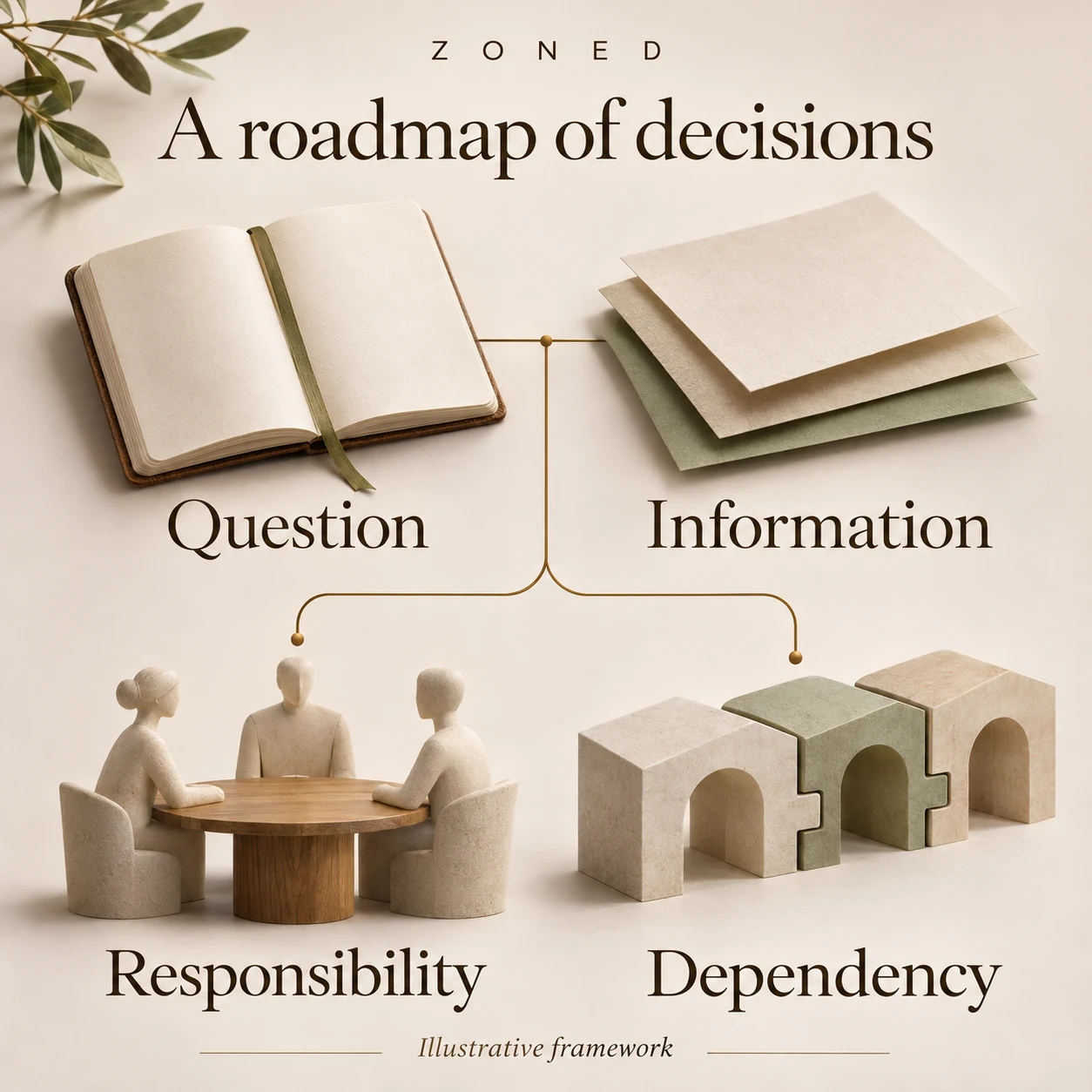
Make dependencies visible before setting dates
An equipment commitment may depend on a service approval, qualified staffing and a site assessment. Show those dependencies before treating the purchase as a dated task. Identify work that can proceed in parallel and work that must wait for a finding.
Keep a decision log recording the question, evidence required, responsible adviser, dependency and approval point. Set timelines against the actual assessments and delivery requirements; an illustrative roadmap is not a guaranteed opening schedule.
A plan for reviews and next steps
Agree how changes to the concept will be recorded and passed to other workstreams. If a service, property assumption or staffing requirement changes, the relevant specialists and financial advisers need updated inputs. Financial modelling and investment due diligence remain outside ZONED’s confirmed offer.
The illustrative outline on How we work connects audience and positioning; offer and equipment priorities; team and specialist responsibilities; and decisions and dependencies. It shows a possible structure for an agreed deliverable, rather than a completed client engagement.